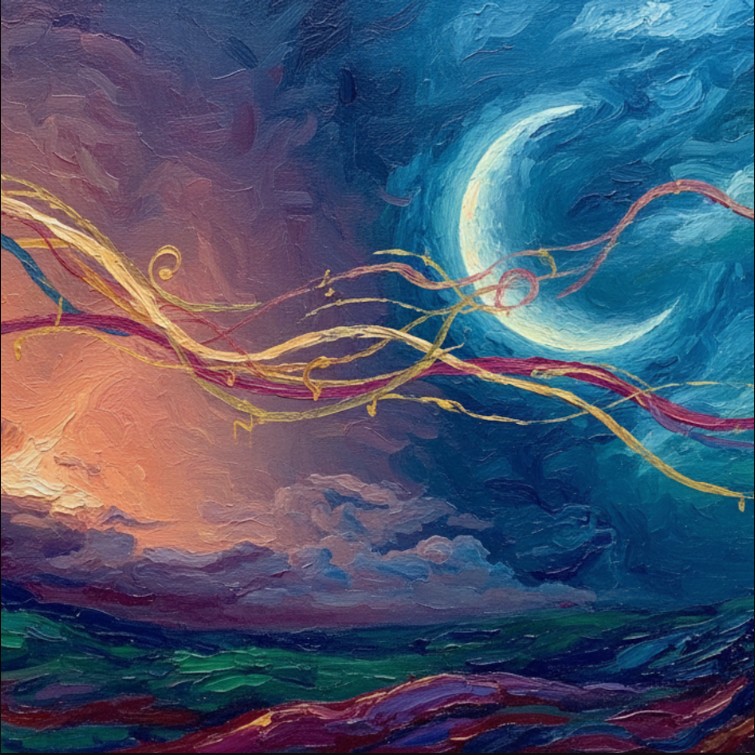
Imagine hearing a song in which the notes paint a landscape so vivid that you realize you’ve been transported into an unfolding emotional experience.
Music can do that. A harmony can shift the atmosphere. A rhythm can create anticipation. A change in instrumentation can suddenly open a new emotional space. Sometimes we simply hear music. Other times, we seem to travel through it.
What happens when we begin listening with that kind of attention?
Your Body on Music
For many of us, a sequence of notes, a striking vocal, an unexpected chord change, or a dramatic crescendo can trigger an immediate physical response—chills, goosebumps, tears, a quickened pulse, or sudden calm.
We often think of music as a companion: a favorite track for a workout, a cinematic music video that feeds the imagination, or a melody carrying us through a long drive.
Yet music can also engage us physically and emotionally in ways we may not consciously notice. Rhythm, melody, harmony, dynamics, timbre, and repetition all contribute to the experience.
And sometimes our imagination turns those sounds into something visual—a landscape, a memory, a color, or an entire scene unfolding in the mind.
Journey Through Sound, Frequency, and the Seven Chakras

First, what is a chakra?
In ancient yogic traditions, chakras are described as centers of energy within the body. Contemporary sound-healing practices sometimes associate individual chakras with particular musical notes or frequencies.
These associations belong to spiritual and holistic traditions rather than established modern anatomy or medical science. For many people, however, they provide a framework for intentional listening and reflection.
The following chart provides a brief overview:
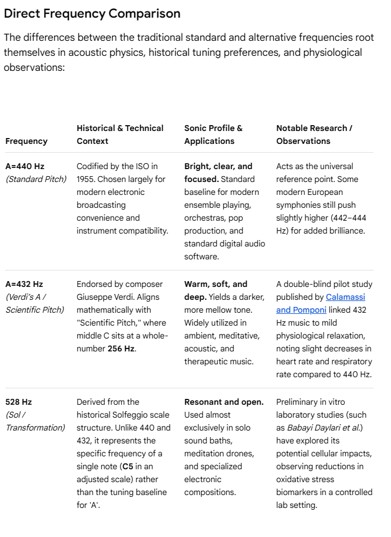
Within an intentional listening practice, particular frequencies can become part of the musical palette—another color on the canvas.
They may draw attention to a certain feeling, create resonance, or simply invite the listener to notice the sound in a different way.
Separate from these traditional frequency associations, scientific research continues to explore how music itself can influence emotional and physiological responses.
One recent study published in the Proceedings of the National Academy of Sciences (PNAS) examined how music may support recovery following acute stress. The researchers reported differences between music and a natural-sound control in areas including mood and measures of autonomic recovery, and they also investigated the brain networks involved in that response.
The important distinction is this: research into the effects of music does not prove specific chakra-frequency claims. But it does add to a growing scientific discussion about the ways organized sound and musical structure can interact with the brain, emotions, and body.
That gives us another reason to become more curious listeners.
Crafting the Experience
Within Healing Vibes Collective, a piece often begins with an emotional intention—perhaps relaxation, uplift, grounding, reflection, movement, or simply the desire to create a particular atmosphere.
From there, choices about tuning, harmony, instrumentation, rhythm, texture, and dynamics begin shaping the musical journey.
Inspired in part by the meeting point between sound-healing traditions and intentional musical design, Healing Vibes Collective’s upcoming release, Art of a Dream, incorporates a 396 Hz crystal singing bowl alongside recurring tones around 528 Hz.
In contemporary sound-healing traditions, frequencies like these are sometimes associated with ideas such as grounding, release, balance, and emotional wellbeing.
Within the composition, however, they are not presented as treatments. They are part of a much larger musical experience shaped by melody, harmony, rhythm, instrumentation, texture, dynamics, and movement.
To explore the role of singing bowls further, read Singing Bowls: What’s Their Superpower?, which looks at how layering a pure-tone singing bowl beneath music can contribute to an intended atmosphere and listening experience.
At their most basic physical level, the sounds in any song begin as vibrations traveling through the air. Our auditory system converts those vibrations into signals the brain can process.
But what happens after that becomes deeply personal.
A rhythm may energize one listener and soothe another. A cello may feel comforting to one person and melancholy to someone else. A particular harmony may stir a memory that belongs to only you.
And that brings us to perhaps the most important part of the musical experience.
Your Body, Your Symphony
Facts, traditions, scientific studies, and theories about music can give us useful information.
But none of them can completely predict what you will experience when you listen.
Healing Vibes Collective uses frequency-aware composition as one element of artistic sound design and wellness intention while keeping medical and therapeutic claims separate from the creative work.
Your own response remains personal.
You may notice relaxation, anticipation, energy, reflection, emotion—or something entirely different.
So now it’s your turn.
The following excerpts are drawn from Healing Vibes Collective’s upcoming release, Art of a Dream, a composition designed to carry the listener through a shifting, dreamlike musical journey.
Like a sequence of dreams, the music changes in texture, momentum, and instrumentation as it unfolds.
Listen to each excerpt without trying to decide what you are supposed to feel.
Simply notice what happens.
Example One: Opening Verse
Listen for the cello’s lower register and the heartbeat-like rhythm beneath it.
- What feeling does the cello create for you?
- What response do you have to that heartbeat-like pulse?
- Does the opening make you feel relaxed, curious, expectant—or something else?
- Does it make you wonder where the music is going next?
Example Two: The Third Chorus — Full Instrumentation
By the third chorus, the arrangement has expanded considerably.
Layers of instrumentation and percussion create one of the fullest moments in the composition, while the flutes rise above the surrounding textures.
- How does your response differ from the opening verse?
- What happens emotionally when the instrumentation becomes fuller?
- What do you notice about the flutes above the larger arrangement?
- Does hearing this section make you curious about the musical journey between the first excerpt and this one?
Example Three: The Percussion Outro
Then the texture changes again.
Much of the instrumentation falls away, leaving percussion to carry the music toward the final guitar ending.
- How does your body respond when the dense instrumentation gives way to percussion?
- Does the rhythm create movement, tension, release, or something else?
- What images does this part of the song bring to mind?
- After hearing all three excerpts, are you curious to hear the complete journey?
The Science and the Art of Sound

Science can help us investigate how music interacts with emotion, cognition, and physiological response.
Tradition can offer different frameworks for thinking about sound, resonance, and intention.
But music is also art.
It is built from choices in melody, harmony, rhythm, timbre, dynamics, silence, contrast, and time.
And ultimately, the listener completes the experience.
Perhaps that is what it means to listen differently—not to search for one prescribed response, but to become more aware of what happens within us as the music unfolds.
Would you choose different music depending on what you need in a particular moment—relaxation, reflection, meditation, movement, or simply enjoyment?
Would you notice more if you listened not only for melody, but for texture, space, rhythm, instrumentation, and change?
We invite you to listen differently.
If you’d like to explore more ways of incorporating sound into everyday life, visit Integrate Soundscapes into Your Daily Wellness Routine.
And one final note—pun intended:
If any of these excerpts moved you, surprised you, or created an image or emotion, we would love to hear what you experienced. Leave a comment below and tell us where the music took you. Please scroll all the way to the bottom.

Your Journey / Our Journey
What is your healing journey reason for reading this article?
- Does the idea of using sound in your healing journey intrigue you?
- Have you become a regular reader of our blog series?
- Or did you just to hear the excerpts from the upcoming Art of Dream?
Sound therapy, or sound healing, might be worth researching and considering.
At Healing Vibes Collective, we understand. Actually, we stand with you. The reason Healing Vibes Collective was formed was to ‘give back’ in gratitude for what the Universe has previously given and continues to give: healing through the selection and repetition of specific sounds, as part of the recovery package.
If you’re seeking non-medicinal methods to soothe emotions, improve sleep, support physical healing, or simply experience tranquility, intentionally using sound frequencies might be a highly effective tool. Follow these links in this article to add Healing Vibes Collective to your favorites on your music streaming platform or YouTube to stay updated on new releases.
Our next blog post isn’t titled yet, but it will be another Inside the Studio segment featuring an interview with Healing Vibes Collective’s composer, Pam Green, about the making of “Art of a Dream” coming in November.

With over 40 years as a multi-instrumentalist, composer, and recording engineer, Healing Vibes Collective blends cinematic instrumental music with a deep fascination for resonance and atmosphere. From early studies in piano and classical guitar to a rich background in jazz, rock, and folk, the project is rooted in both lifelong craftsmanship and the pursuit of emotional connection.
A personal turning point led to a deeper exploration of music as a source of peace, balance, and renewal. Today, these compositions range from the uplifting 528 Hz rhythms of Tune To Joy to immersive soundscapes tuned to 432 Hz—music inspired by the natural relationship between sound, mood, and environment.
The latest composition, Walking in a Painting, combines fluid guitars, a fusion of genres, and crystal singing bowls to create an uplifting journey that listeners describe as joyful, calming, and emotionally transporting. Click this link to go to the page to view a list of music streaming services that play “Walking in a Painting.”

- Follow on Facebook
- Subscribe to the email list for exclusive updates about new music and blog posts or comment about this blog post, and you’ll be on the list!
- Tell others about our Collective
- Share this blog
- Like & Subscribe to YouTube
Thank you for listening and for your support. We wish you well on your music-inspired journey.
Please contact us for inquiries, comments, and feedback.
contact@healingvibes.music
The content in this article, including videos, links, and other material, is for general and educational information purposes only. It is not intended to be a substitute for professional advice, diagnosis, or treatment. Healing Vibes Collective, its affiliates, and associates are not responsible for any action a person may take as a result of the information contained in this article or anywhere on the Healing Vibes Collective website.


Leave a Reply